- Open Time 24 hour
- Call: +91 86960-97555
- Email: support@roboticsbydrkhatri.com


The human hip is a strong joint, and this enables the human body to move smoothly. This implies that they can be optimistic and know what is expected of them in case they need surgery. The robotic hip replacement surgery, whether simple or complex, can help the human body move freely and reduce pain. While all medical treatments carry some risks, understanding these risks helps patients make informed choices and feel more confident during recovery.
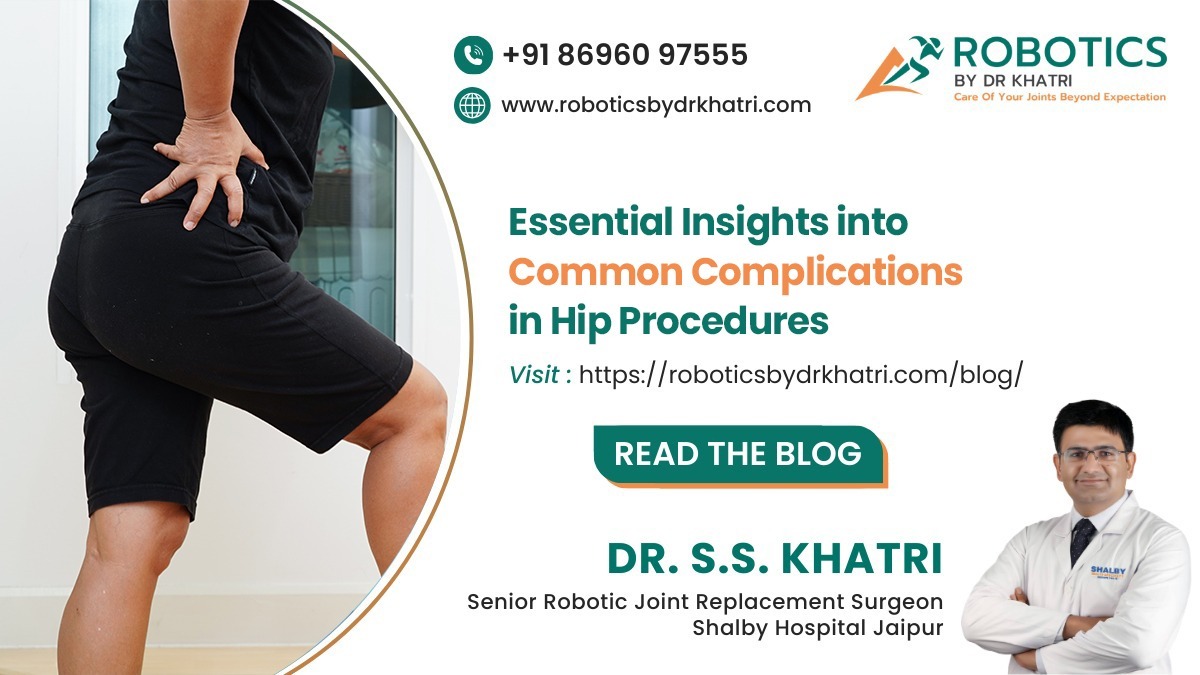
Examining the challenges of hip procedures reveals an important part of care that extends beyond surgery. These challenges include infection and mobility problems. These challenges teach us how important it is to be adequately prepared, vigilant, and give proper aftercare. This helps them understand the challenges involved in treatment and be assured of the best outcomes since they have all the information they require.
Various Essential Insights into Common Complications in Hip Procedures
Hip procedures can be beneficial to individuals, enabling them to move around and have an enhanced quality of life. However, they have some challenges.
Conclusion
While hip surgery has its advantages in terms of movement and ease of pain, one must be aware of the possible risks associated with this procedure. This is vital for a successful recovery. With the right medical guidance and care, one is able to recover and gain a new sense of confidence and a healthy lifestyle.
Examining the challenges of hip procedures reveals an important part of care that extends beyond surgery. These challenges include infection and mobility problems. These challenges teach us how important it is to be adequately prepared, vigilant, and give proper aftercare. This helps them understand the challenges involved in treatment and be assured of the best outcomes since they have all the information they require.
Various Essential Insights into Common Complications in Hip Procedures
Hip procedures can be beneficial to individuals, enabling them to move around and have an enhanced quality of life. However, they have some challenges.
- Infection
- Dislocation of the hip joint
- Nerve or blood vessel damage
- Persistent pain or stiffness
- Allergic reactions to materials
- Blood clots
Conclusion
While hip surgery has its advantages in terms of movement and ease of pain, one must be aware of the possible risks associated with this procedure. This is vital for a successful recovery. With the right medical guidance and care, one is able to recover and gain a new sense of confidence and a healthy lifestyle.