- Open Time 24 hour
- Call: +91 86960-97555
- Email: support@roboticsbydrkhatri.com


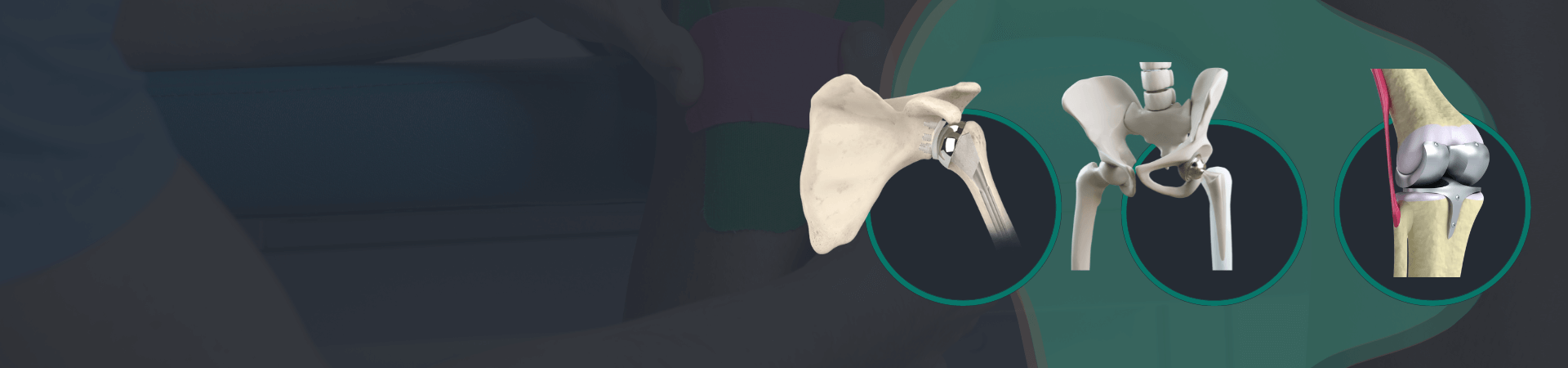
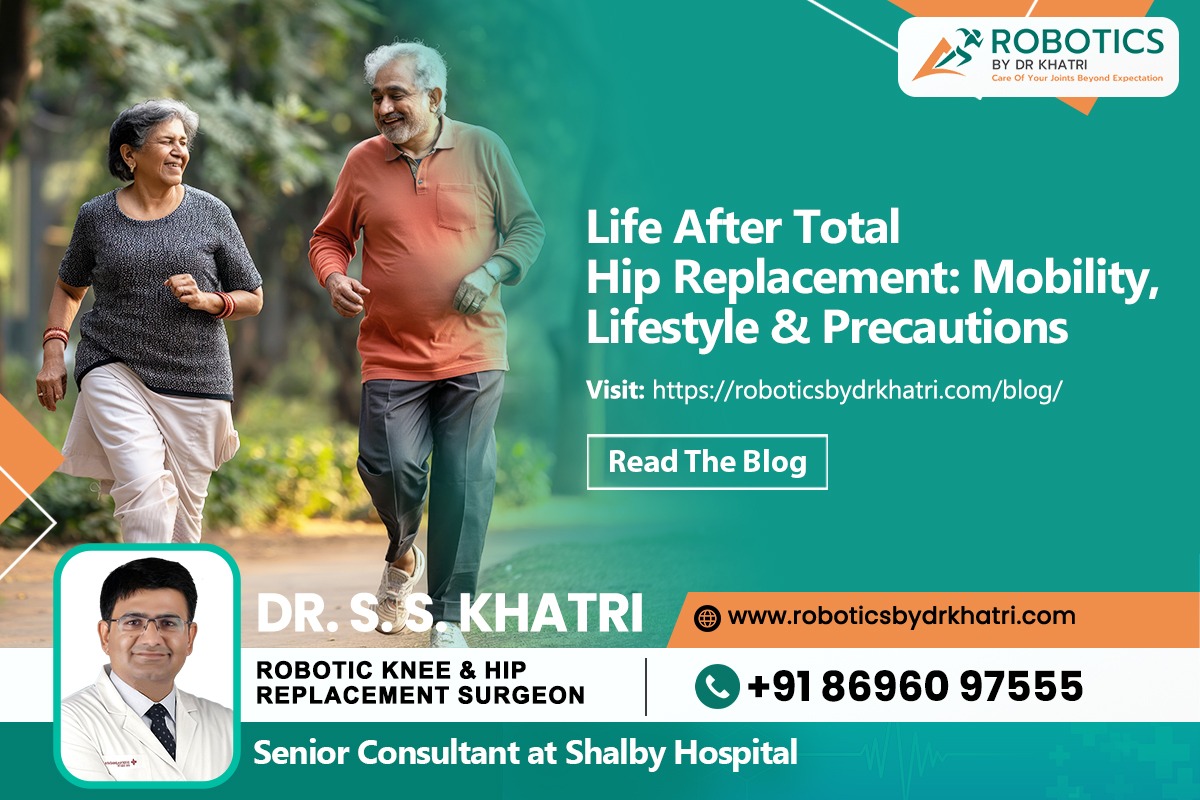
Total hip replacement surgery brings a new and hopeful beginning. Patients can easily experience reduced pain, ease of movement, and independence. Prior to the surgery, patients were unable to perform daily tasks such as walking and climbing stairs due to chronic pain in the hip region. After the surgery and the subsequent recovery process with the best hip replacement surgeon in Jaipur, patients can easily regain their mobility and confidence.
After total hip replacement surgery, you can expect to have improved mobility, and it is necessary that you modify your lifestyle and take the right steps to ensure success. To protect your new joint, maintain a healthy weight, engage in low-impact exercises, and follow your doctor’s advice. Balance movement and care for a vibrant life post-hip replacement with fewer restrictions.
Ref: https://healthcare.utah.edu/orthopaedics/specialties/joint-replacement/patient-guide/after-hip-replacement
After total hip replacement surgery, you can expect to have improved mobility, and it is necessary that you modify your lifestyle and take the right steps to ensure success. To protect your new joint, maintain a healthy weight, engage in low-impact exercises, and follow your doctor’s advice. Balance movement and care for a vibrant life post-hip replacement with fewer restrictions.
Understand Life After Total Hip Replacement
Total hip replacement usually provides pain relief and better mobility for daily activities. Taking proper care of yourself after hip replacement surgery is very important for ensuring that the result is not temporary.- Gradual return to movement
- Assistive devices
- Maintain a healthy weight.
- Modify daily habits
- Stay physically active
- Avoid high-impact activities
- Watch for warning signs.
Ref: https://healthcare.utah.edu/orthopaedics/specialties/joint-replacement/patient-guide/after-hip-replacement