- Open Time 24 hour
- Call: +91 86960-97555
- Email: support@roboticsbydrkhatri.com


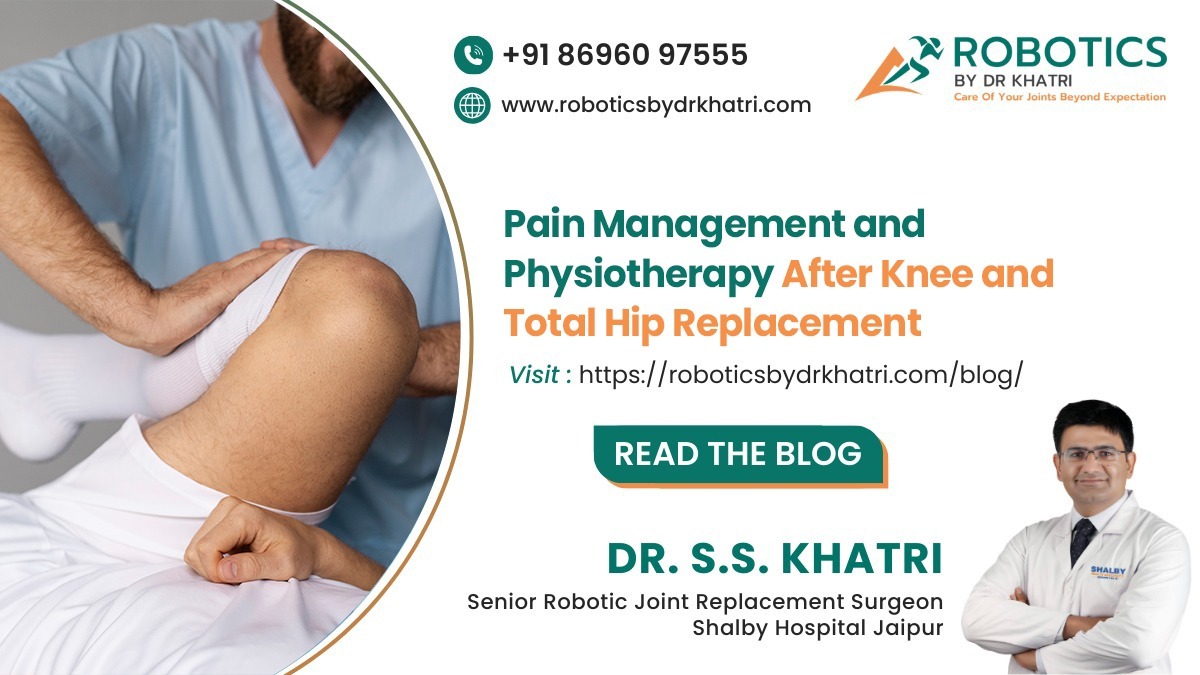
Recovery after knee or hip replacement by the best robotic knee replacement surgeon is more than just healing; it’s about regaining movement, confidence, and independence. Good postoperative care and focused physiotherapy are key to turning a successful surgery into a great recovery. Guided rehab post-surgery reduces pain, improves mobility, and builds strength. With each movement, you will find it gets easier and more natural, helping you lead a vibrant and active life.
A good physiotherapy program offers personalized care that helps patients move from gentle exercises to daily activities. With regular effort and support from professionals, patients can regain their physical abilities and feel freer. This journey takes patience and shows measurable progress, with each small improvement being an important step towards a more active and fulfilling future.
Various Pain Management and Physiotherapy After Knee and Total Hip Replacement Recovery after knee and hip replacement starts with pain management and physiotherapy. Structured rehabilitation improves mobility, reduces discomfort, and restores strength for confident daily activity.
Conclusion The management of pain and participation in scheduled physiotherapy activities are of great value for a smooth recovery for patients who have undergone surgery for knee and hip replacements. With commitment and guidance from experts, patients can regain their mobility and live an active and independent lifestyle.
A good physiotherapy program offers personalized care that helps patients move from gentle exercises to daily activities. With regular effort and support from professionals, patients can regain their physical abilities and feel freer. This journey takes patience and shows measurable progress, with each small improvement being an important step towards a more active and fulfilling future.
Various Pain Management and Physiotherapy After Knee and Total Hip Replacement Recovery after knee and hip replacement starts with pain management and physiotherapy. Structured rehabilitation improves mobility, reduces discomfort, and restores strength for confident daily activity.
- Pain management (paragain management)
- Range of motion exercises
- Gait training (walking practice)
- Functional training
- Gradual progression
Conclusion The management of pain and participation in scheduled physiotherapy activities are of great value for a smooth recovery for patients who have undergone surgery for knee and hip replacements. With commitment and guidance from experts, patients can regain their mobility and live an active and independent lifestyle.