Email: support@roboticsbydrkhatri.com
 Call: +918696097555

Top Common Recovery Challenges That People Face After Joint Surgery
Posted By Robotics By Dr. Khatri • Jun 16, 2026
Joint surgery is often a new beginning in many ways for patients who have been suffering from joint problems for quite some time, to the extent that the joint pain has started to affect their daily activities. Selecting the best knee surgeon in Jaipur can be very comforting for patients as they go under the knife, but recovery is also an equally important part of this process. Even if everything works well in the operation theatre, recovery might sometimes not be smooth.
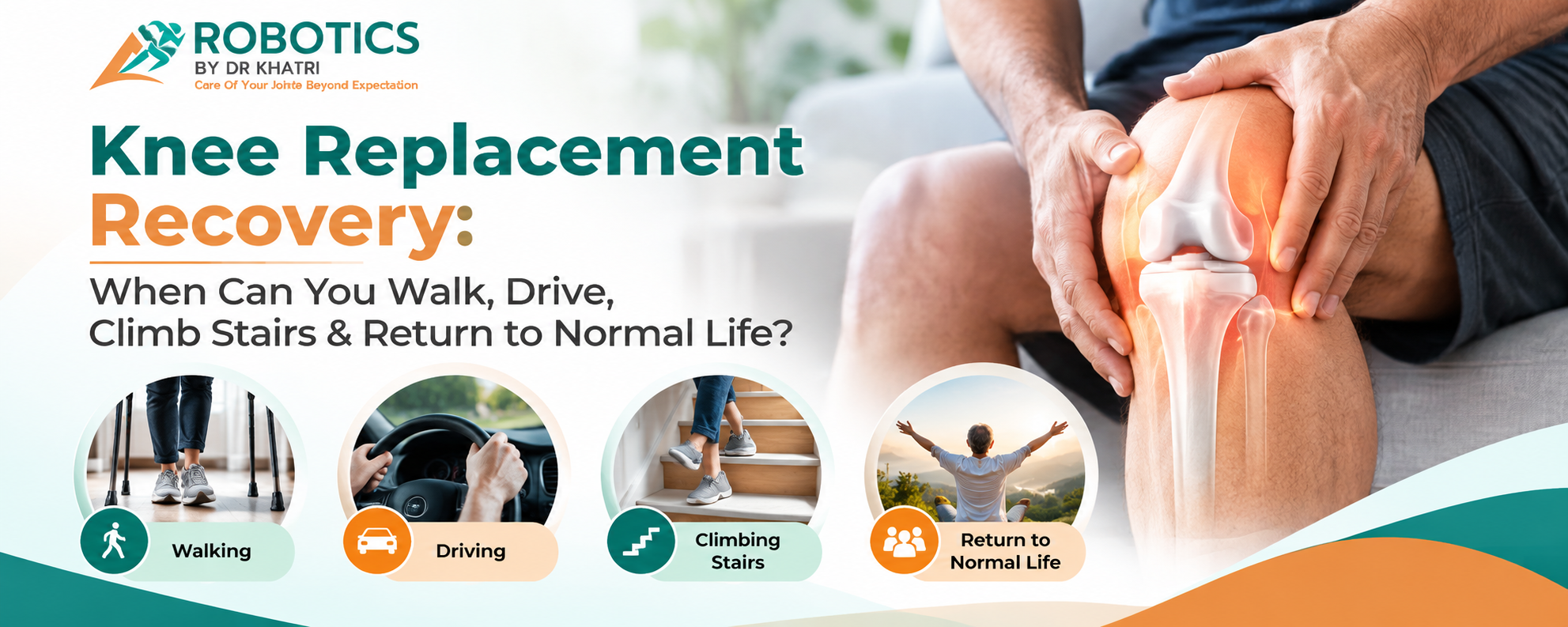
Surgery recovery process cannot be described as linear because it is not. The whole thing consists of various stages; sometimes things will be good, while at other times they won’t and that is absolutely fine. It is natural for one to feel swollen, stiff, sore, and weak after surgery as well as having difficulty moving around due to changes in joint function. Your body is healing and adapting all at once, which is why you may face common challenges during this time.
Various Common Recovery Challenges That People Face After Joint Surgery
Rehabilitation after joint replacement surgery is unpredictable. No matter how good the operation is performed, there is still time for the body to adapt itself back. There will be some good days and days that may seem slower than hoped for.
• Pain and swelling that come in waves
After joint surgery, pain will come in waves; there will be good days and bad days with pain, sometimes depending on the days following physical therapy or any activities done. Sometimes, there will be days when swelling is felt, followed by good days where the swelling subsides. Think of it like roadwork: even after repairs, there’s still cleanup and settling to do.
• Muscle weakness that surprises people
This often surprises patients. Even after having your joint operated on, the muscles around it may become weak because you don’t use them enough. It’s like fitting your car with a high-performance engine while its tires are deflated; everything works fine, but it’s not quite smooth sailing. That’s why having an effective rehabilitation program designed by the best knee replacement surgeon in Jaipur is key to your recovery.
• Sleep disruption during early recovery
Sleep doesn’t always come easily in the first few weeks. Discomfort, adjusting positions, or even just being more aware of the healing joint can interrupt normal rest cycles. And when sleep is off, everything else feels harder, pain tolerance drops, fatigue increases, and motivation dips. It’s one of those ripple effects people don’t always expect going in.
• Getting back to normal activities too soon
This is a common challenge, especially when people start feeling better. The temptation is to return to routine quickly, walking more, skipping rest, pushing activity levels. But the joint is still rebuilding strength and stability underneath. It’s a bit like painting a wall that looks dry on the surface but is still curing beneath. Too much stress too early can slow everything down.
• Stiffness that feels harder in the morning
Morning stiffness is a common post-surgery complaint. After being inactive, joints can feel “stuck” and awkward at first, but gradually loosen up. This isn’t about damage, but rather circulation and lubrication. Regular movement during the day helps improve this, even if it starts slowly.
Conclusion
Recovering from joint surgery takes time, not necessarily because the recovery process is lengthy but because it requires a constant effort. The presence of pain, tightness, muscle weakness, and inconsistencies are expected. Through regular rehabilitation, patience, and the guidance of a professional surgical team, one can easily overcome such difficulties.