- Open Time 24 hour
- Call: +91 86960-97555
- Email: support@roboticsbydrkhatri.com


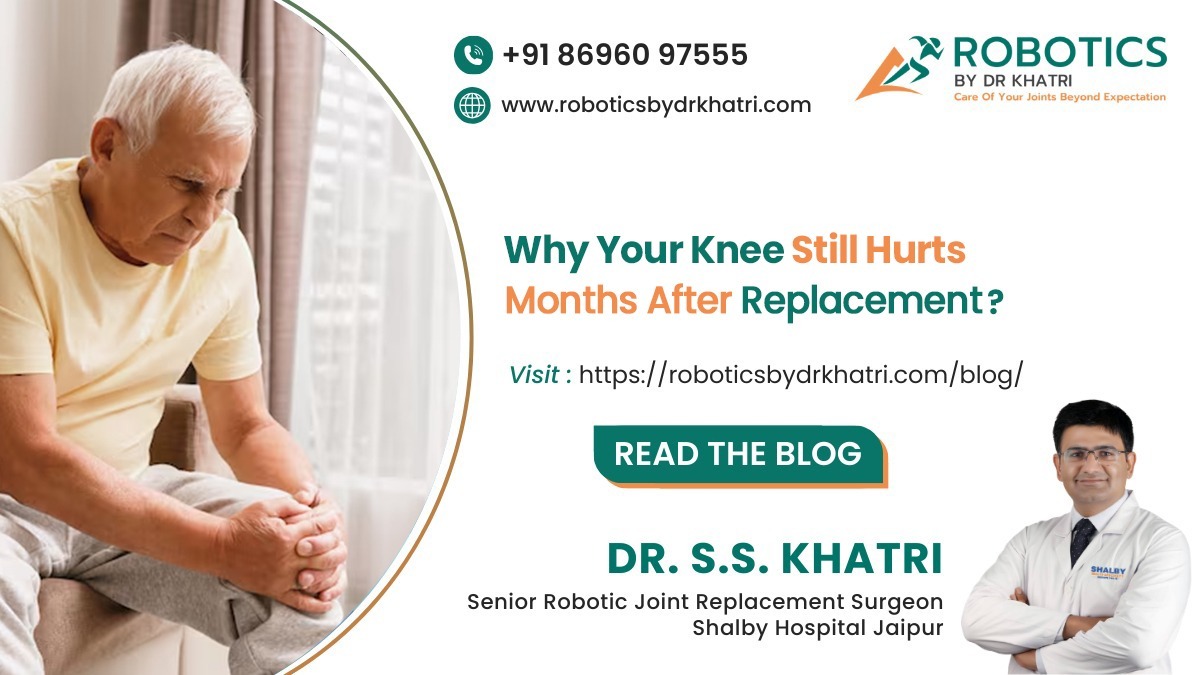
Knee replacement surgery is often seen as the ultimate fix for chronic knee pain; a way to get back to walking comfortably, exercising, and living fully again. But what if months have passed and your knee still hurts? You’re not alone, and it doesn’t always mean something went wrong. Persistent discomfort after knee replacement can happen for several reasons, and understanding them is the first step to recovery.
Understanding Post-Surgery Knee Pain
After a total knee replacement, the body needs time to adjust to the new joint. The muscles, ligaments, and soft tissues around the knee have to relearn movement and strength patterns that changed over time. So, mild pain, swelling, and stiffness for a few months are expected especially when walking long distances, climbing stairs, or sitting for long periods. But pain that continues beyond 3–6 months may signal other underlying issues that deserve medical evaluation.Common Reasons for Ongoing Knee Pain After Replacement
1. Soft Tissue or Muscle Healing
Even when the artificial joint is functioning perfectly, surrounding tissues may take longer to heal. Tightness or pulling sensations around the knee are common and usually improve with continued physiotherapy.2. Inflammation or Scar Tissue Formation
Scar tissue (arthrofibrosis) can limit flexibility and cause persistent stiffness or pain. Early and consistent movement exercises are key to preventing it.3. Infection
Though rare, deep joint infections can cause continuous pain, swelling, redness, or warmth around the knee. This requires immediate medical attention and may need antibiotics or additional surgery.4. Implant Loosening or Misalignment
In a small number of cases, the prosthetic implant may loosen or not align perfectly over time, leading to mechanical pain. Robotic-assisted surgeries greatly reduce this risk by ensuring precise alignment during the procedure.5. Nerve Pain or Sensitivity
Sometimes, nerves around the incision become hypersensitive. This may feel like burning, tingling, or shooting pain. Desensitization exercises or medication can help manage this.6. Overactivity or Weak Muscles
Trying to do too much too soon like returning to heavy physical work can stress the healing knee. Weak thigh muscles also contribute to joint discomfort.What You Can Do to Relieve Pain
1. Stay Consistent with Physiotherapy
Skipping exercises can slow healing. Controlled stretches and strengthening routines help restore flexibility and stability.2. Use Cold & Heat Therapy
Ice packs reduce swelling, while gentle heat soothes stiff muscles.3. Maintain a Healthy Weight
Every extra kilo puts more pressure on your new joint. Losing even a little weight can significantly reduce pain.4. Follow Up with Your Surgeon
If pain persists beyond 3–6 months, don’t ignore it. An X-ray or scan can help detect hidden causes like implant issues or bone inflammation.5. Opt for Low-Impact Activities
Replace high-stress activities with swimming, cycling, or yoga. These help strengthen the knee safely.When to See Your Doctor If You Feel Pain After Knee Replacement Surgery?
You should consult your orthopedic specialist immediately if:- Pain increases instead of improving over time
- The knee feels hot, red, or swollen
- You develop fever or discharge near the incision
- The joint feels unstable or clicks painfully while walking
- Timely intervention ensures faster recovery and protects your new knee joint.