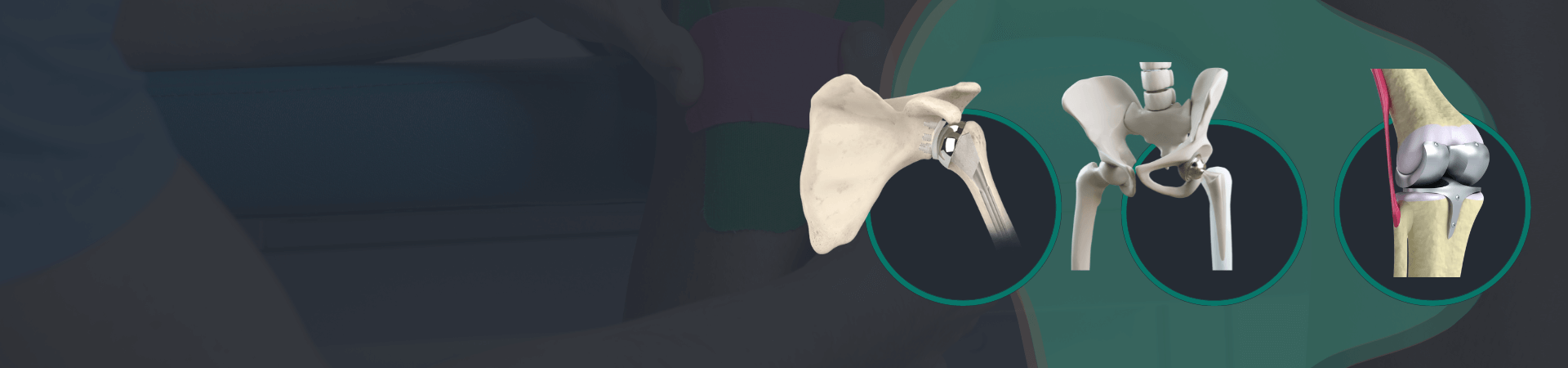
Pain Management & Physiotherapy After Knee and Total Hip Replacement

Recovery after knee or hip replacement by the best robotic knee replacement surgeon is more than just healing; it’s about regaining movement, confidence, and independence. Good postoperative care and focused physiotherapy are key to turning a successful surgery into a great recovery. Guided rehab post-surgery reduces pain, improves mobility, and builds strength. With each movement, you will find it gets easier and more natural, helping you lead a vibrant and active life.
A good physiotherapy program offers personalized care that helps patients move from gentle exercises to daily activities. With regular effort and support from professionals, patients can regain their physical abilities and feel freer. This journey takes patience and shows measurable progress, with each small improvement being an important step towards a more active and fulfilling future.

Various Pain Management and Physiotherapy After Knee and Total Hip Replacement Recovery after knee and hip replacement starts with pain management and physiotherapy. Structured rehabilitation improves mobility, reduces discomfort, and restores strength for confident daily activity.

  • Pain management (paragain management)
Effective pain control is crucial for recovery in robotic knee replacement surgery. Managing pain helps patients heal better. There are different ways to control pain, including giving specific medications, using ice packs to reduce swelling, and positioning the body to avoid pressure on sore areas. By using these methods, the patients are able to manage their pain level. This is crucial for physiotherapy sessions. When patients take part in rehab with little or no pain, their rehab experience is enhanced, and they feel empowered as they become stronger.

  • Range of motion exercises
Gentle exercises can help improve joint flexibility and movement. These basic movements can help prevent stiffness and gradually increase the normal movement of your knee or hip. By doing these movements, you can improve the flow of blood, reduce the discomfort you feel, and maintain the health of your joints. This will enable you to move more easily through your daily activities.

  • Gait training (walking practice)
Patients can walk perfectly and effectively using devices such as walkers and crutches. Trained physiotherapists assist the patients in maintaining the right posture and the right body weight. This enables the patients to move around confidently without the risk of injury. Each step taken by the patients is therefore a safe one. This is a great benefit to the patients.

  • Functional training
Every day movements are important for safety and movement. These movements include sitting comfortably, standing up, and moving up and down the stairs comfortably. It also involves getting out of and into the bed safely. These movements are essential for improving movement and making daily routines safe.

  • Gradual progression
The process of recovery is a delicate one and is done gradually. As the patients improve and show their capability of handling different challenges, the degree of difficulty is increased. This method caters to the needs of each person at their own pace, making it a conducive environment for healing and improvement.

Conclusion The management of pain and participation in scheduled physiotherapy activities are of great value for a smooth recovery for patients who have undergone surgery for knee and hip replacements. With commitment and guidance from experts, patients can regain their mobility and live an active and independent lifestyle.

Total Hip Replacement: When Do You Really Need It?

Your hips are a crucial part of your daily activities. They assist you in climbing stairs, getting out of bed, bending down to tie your shoelaces, and even taking a walk. Pain in your joints makes even the simplest of tasks a challenge. What starts as occasional stiffness can turn into a constant source of pain, making it difficult for you to move around and affecting your quality of life. It is essential to get on top of these problems as soon as possible to regain your freedom of movement and improve your quality of life. If you are planning to undergo hip replacement surgery, a reliable total hip replacement surgery in Jaipur can help you. Total hip replacement is often the best option when pain and joint damage make it hard to do daily activities, and other treatments like medicine, therapy, or lifestyle changes don’t help. It’s important to know when surgery is the right option. This procedure not only helps reduce pain but also allows you to move more freely, gain independence, and live without constant limitations.

Signs That Show That You Need a Total Hip Replacement

Total hip replacement is a surgical option for those whose chronic hip pain and stiffness hinder daily activities. When medications and therapy fail to provide relief, surgery may help restore mobility and improve quality of life.
  • Persistent, severe hip pain
If the pain in the hip area persists for a long time and even affects daily activities such as walking, sitting, and sleeping, then it could be a sign of serious damage to the joint. If your hip pain is restricting your movements and reducing your quality of life, it might be the right time to think about further treatment. A best hip replacement surgeon in Jaipur can help you through this.
  • Advanced osteoarthritis
Osteoarthritis is the most common cause of people requiring hip replacement surgery. It causes the wear and tear of the cartilage in the hip joint, and once the cartilage is worn out, the hip joint starts rubbing against each other, causing immense pain and stiffness. Even simple tasks may become difficult, and your quality of life may be affected.
  • Hip fractures or injury
Severe fractures, especially hip fractures, can be very challenging for senior citizens. If the fracture is too severe for normal treatment, hip replacement surgery might be required. This procedure can be a real lifesaver for those with injuries that restrict the way they move.
  • Pain at rest or during sleep
If you are experiencing pain that persists even when you are resting or sleeping, this could be an indication of severe damage to your joints. Such pain is an indication that your joints have deteriorated to the point where inflammation and damage are restricting your movements, which is an indication of how serious the problem is.
  • Reduced quality of life
If your hip pain is interfering with your life goals, your exercise routine, or your social interactions, then hip replacement surgery may be an option to consider. Ref: https://internalmedicine.usc.edu/blog/is-it-time-for-a-hip-replacement/

Conclusion

If your hip pain persists, you find yourself not being able to move around as you would like, and other options have not worked, a total hip replacement may be the way to go. The overall idea of this surgery is to reduce your pain and improve your independence and quality of life. You should discuss this with an orthopedic surgeon. They can assist you in weighing the pros and cons and help you make a decision about when surgery is the right thing to do.

How Implant Accuracy Affects the Success of Knee and Hip Replacement

Knee and hip replacement surgeries have changed the lives of many individuals by restoring their mobility and relieving them of chronic joint pain. The key to the success of these surgeries, to a large extent, depends on one thing: ensuring that the implant is placed in just the right position. If the artificial joint is properly aligned, it can move in a manner similar to that of a natural joint, in sync with the body’s alignment, and without putting any additional strain on it. This is what makes all the difference and ensures the highest success rates. With the best doctor for knee replacement, you can have a near-perfect knee replacement surgery. Even the slightest deviation can cause imbalance, instability, and uneven wear and tear. Position is very important. It helps maintain smooth motion, reduces pain, accelerates recovery, and promotes long-term success. In today’s joint replacement surgery, precision is no longer a secondary aspect but a primary one.

Various Ways in Which Implant Accuracy Affects the Success of Knee and Hip Replacement

Precision is necessary for the successful installation of knee and hip implants. When the joint is in its proper position, it moves smoothly and wears down less with age. Even a slight discrepancy in the joint will impact comfort as well as the longevity of the implant.
  • Correct alignment of the joint
Getting the joint aligned properly is essential to align with the natural body. When properly aligned, the body is evenly distributed without putting pressure on other joints. However, when the joint is not properly aligned, the wear and tear on the joint becomes uneven, which can increase the pain and potentially lead to more serious problems such as chronic pain and degeneration of the joint. The total hip replacement surgery in Jaipur can help you align your joint to its best form.
  • Reduced implant wear and tear
Positioning implant parts correctly is very important. It reduces unusual resistance as the joint moves. With everything in the right place, the risk of early onset wear, loosening, or failure of the prosthetic joint decreases. Paying close attention to how the joint is positioned will improve the function and life of the joint. This will enable patients to live pain-free and active lives for many years.
  • Faster recovery and better comfort
If the implant is properly fitted and working well, patients can expect to have less pain, improved balance, and easier movement as they heal. When the implant is properly aligned, it also reduces pressure on the muscles and ligaments surrounding the area, which helps the healing process.
  • Smoother range of motion
When implants are placed in the correct position, they work just like natural joints. This accurate positioning enables a person to move their limbs freely, walk easily, sit comfortably, and perform their daily tasks with renewed confidence and freedom. Therefore, they experience enhanced freedom of movement and quality of life.
  • Improved joint function
When the implants are properly placed, they function like natural joints, allowing you to move, walk, and bear weight in a smooth manner. On the other hand, if the implants are not positioned properly, it may lead to restricted movement, which will reduce the effectiveness of the implants as well as the comfort of the individual. Ref: https://www.utsouthwestern.edu/newsroom/articles/year-2024/may-robotic-knee-replacement.html

Conclusion

The proper selection of the size of the implants in knee and hip replacement surgery is critical for a successful procedure. When accuracy is a concern, the joints will be properly positioned, and the result will be the reduction of the risks of potential pain and complications in the future. For patients, accuracy means greater mobility and faster recovery.